


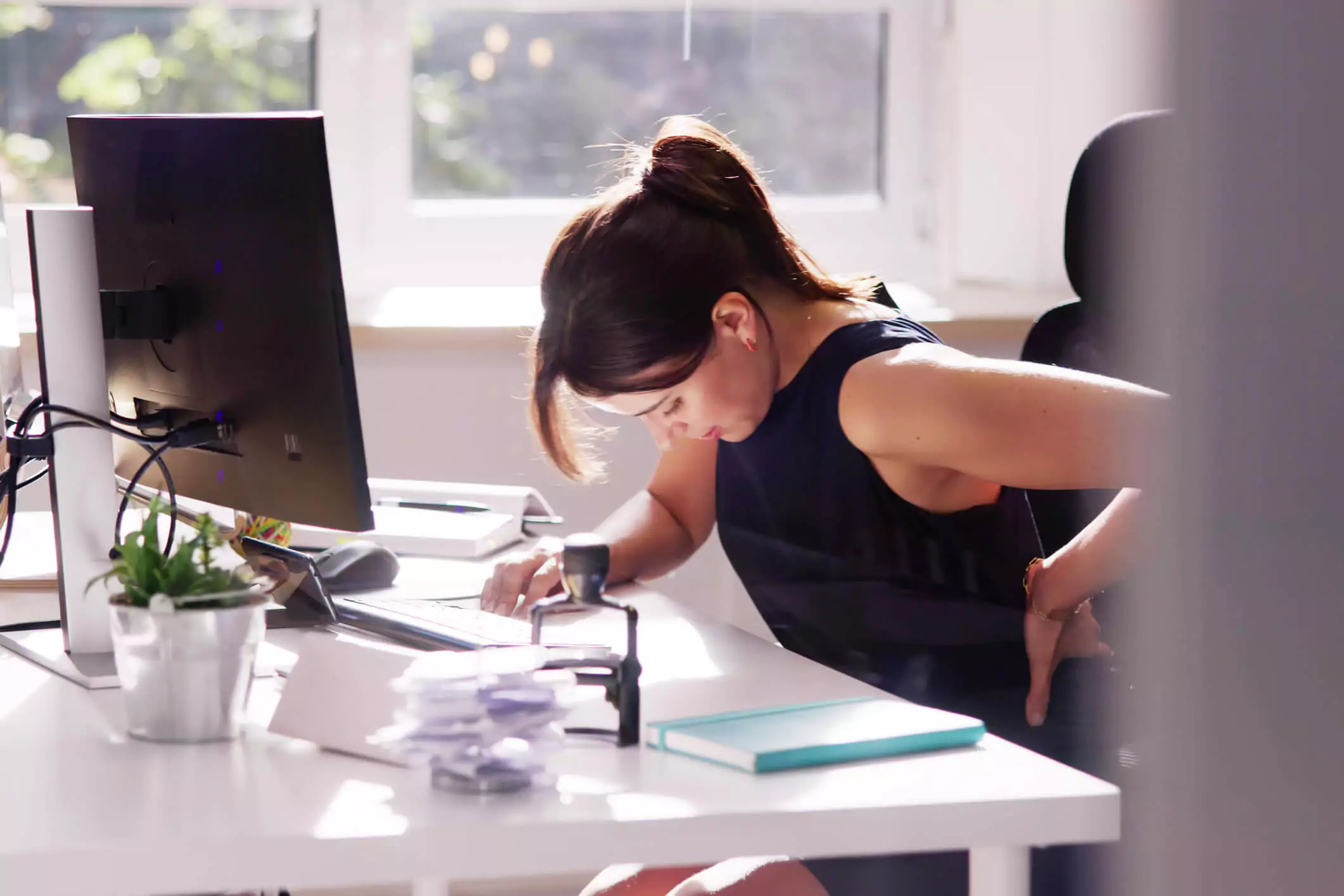
Let’s be honest. Your desk job is trying to turn you into a human question mark. You know the feeling—that slow-motion slump where your shoulders creep up to your ears, your head juts forward, and your spine slowly forgets its natural ‘S’ curve. It’s not just about looks. It’s about that nagging ache in your neck, the tightness between your shoulder blades, the foggy headache at 3 PM.
Well, here’s the deal: you can fight back. And you don’t need a fancy gym membership or an hour of your day. Just a few minutes and some awareness. These posture correction exercises are your secret weapon to undo the damage of the 9-to-5 grind.
Why Your Desk is Your Posture’s Worst Enemy
Think of your body like a brand-new car. Drive it aligned, and it runs smoothly for years. But if you’re constantly pulling to one side? You get uneven tire wear, a shaky steering wheel, and weird noises. Sitting all day, especially with poor ergonomics, is like that constant pull. It leads to muscle imbalances—some muscles get weak and lazy (looking at you, glutes and core), while others become tight and overworked (hello, chest and neck).
This imbalance is the root of most desk-related pain. The good news? It’s reversible.
Quick-Fix Exercises You Can Do At Your Desk
These are your in-the-trenches moves. Perfect for a mid-morning or afternoon reset. No one will even notice you’re doing them.
1. The Chin Tuck: Resetting Your Head
This is arguably the most important exercise for combating “text neck.” Imagine you’re trying to make a double chin. Sounds glamorous, right? But it works.
How to do it: Sit up straight. Gently pull your chin and head straight back without tilting your head up or down. You should feel a stretch at the base of your skull and a tightening in the front of your neck. Hold for 3-5 seconds, then release. Aim for 10-15 reps.
2. Seated Scapular Squeezes: Wake Up Your Upper Back
This move counteracts the hunched-forward, rounded shoulder posture. It teaches your shoulder blades to slide back into place.
How to do it: Sit tall, arms relaxed at your sides. Squeeze your shoulder blades together, as if you’re trying to hold a pencil between them. Avoid shrugging your shoulders up to your ears. Hold the squeeze for 5-10 seconds, then release. Feel that? That’s your posture waking up. Do 10-15 reps.
3. The Chest Opener Stretch
Your chest muscles are likely tight from all that reaching forward for the keyboard. This stretch gives them some much-needed length.
How to do it: Sit on the edge of your chair. Clasp your hands behind your back. If that’s too much, just grab the opposite elbows behind your back. Gently pull your shoulders back and down, opening up your chest. Take a deep breath in and hold the stretch for 20-30 seconds.
Building a Stronger Foundation: Key Posture-Strengthening Moves
While the desk exercises are great for immediate relief, the real magic happens when you build a stronger, more resilient body. These exercises, done a few times a week, are game-changers.
1. The Dead Bug: Core Stability 101
A strong core is the foundation of good posture. The Dead Bug is a safe, incredibly effective way to build that stability without straining your neck or back.
How to do it: Lie on your back with your arms extended toward the ceiling and your knees bent at a 90-degree angle (like a “tabletop”). Slowly and with control, lower your right arm and left leg toward the floor, keeping your core braced and your lower back pressed into the ground. Don’t let it arch! Return to the start and repeat with the opposite arm and leg. Aim for 2-3 sets of 10-12 reps per side.
2. The Glute Bridge: Re-engaging Your Powerhouse
Your glutes are the powerhouse of your posterior chain. Sitting all day puts them to sleep. This exercise wakes them up, which in turn helps stabilize your pelvis and support your lower back.
How to do it: Lie on your back with your knees bent, feet flat on the floor hip-width apart. Drive through your heels to lift your hips toward the ceiling, squeezing your glutes at the top. Your body should form a straight line from your shoulders to your knees. Hold for a second, then lower with control. Do 3 sets of 15 reps.
3. The Wall Angel: The Posture Reality Check
This one is humbling, honestly. It reveals just how much mobility you’ve lost in your upper back and shoulders.
How to do it: Stand with your back against a wall. Your heels, glutes, upper back, and head should all be touching it. Now, raise your arms into a “goalpost” position, with elbows bent at 90 degrees and the backs of your hands and elbows against the wall. Slowly slide your arms up overhead, trying to keep all points in contact with the wall. Go as far as you can without your back arching away, then slowly slide them back down. It’s a small, controlled movement. Do 10-15 reps.
Integrating Posture Into Your Daily Grind
Exercises are fantastic, but they’re only part of the solution. You have to change the environment that created the problem in the first place.
| Habit | How It Helps |
| Set a Posture Check Alarm | Every 30 minutes, your phone buzzes. You reset: shoulders down, chin tucked, feet flat. It feels weird at first, then it becomes second nature. |
| Optimize Your Workspace | Top of your monitor at eye level. Elbows at 90 degrees. Hips slightly above knees. It’s ergonomics, not rocket science. |
| Walk and Talk | Taking a call? Stand up. Pace. Or better yet, take a walking meeting. It breaks up the sedentary marathons. |
And don’t forget to breathe. Seriously. Deep, diaphragmatic breathing not only reduces stress but also encourages your ribcage and spine to move properly. It’s a free, always-available postural tool.
The Long Game: It’s About Consistency, Not Perfection
You won’t fix years of slouching in a single day. The goal isn’t perfect posture every second—that’s a recipe for frustration. The goal is a body that is aware, strong, and capable of returning to a good position again and again.
Think of it less like a chore and more like a series of small, kind gestures you make for your future self. A chin tuck during a tedious Zoom call. A scapular squeeze while waiting for a file to load. A glute bridge while watching TV. These tiny moments add up. They rewire your muscle memory. They tell your body, “Hey, we’re not a question mark anymore.”
Your desk doesn’t have to win. You’ve got the tools. The real shift happens not in the gym, but in the quiet, consistent decision to move differently, right where you are.